Katja Jung · 14 October 2026
How Sensor Networks Track Real-Time Stress Patterns in High-Performance Shelter Fabrics During Extended Expeditions
High-performance shelter fabrics used in mountaineering, polar research, and long-distance trekking incorporate embedded sensor networks that monitor stress patterns in real time, and these systems combine strain gauges, piezoelectric elements, and wireless nodes to capture data on tension, shear, and environmental degradation while teams remain in the field. Researchers at institutions across North America and Europe have integrated these components into multilayer laminates since the early 2020s, allowing continuous readings that feed into onboard processors or satellite uplinks for later analysis.
Core Components of the Sensor Networks
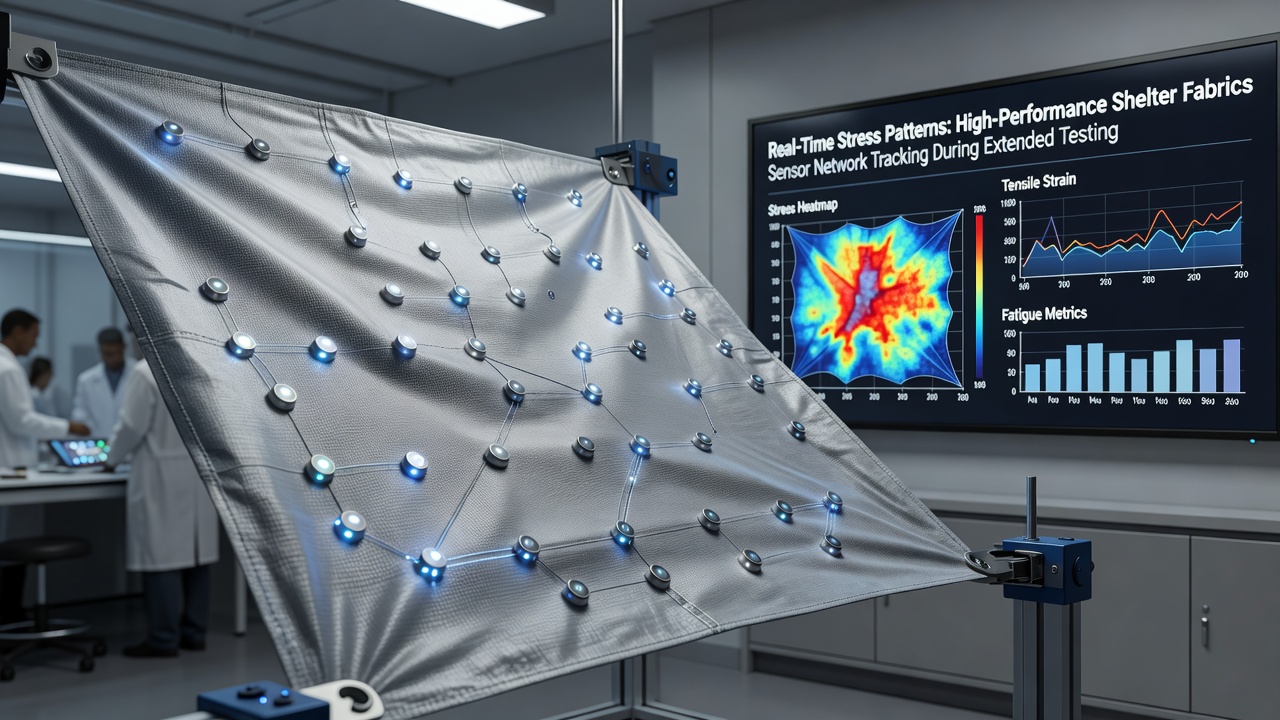
Each network consists of distributed nodes that measure micro-strain at multiple points across the fabric surface, and the nodes connect through low-power mesh protocols such as Zigbee or LoRa that maintain connectivity even when shelters experience repeated folding and high winds. Data loggers record peak loads, fatigue cycles, and moisture ingress at intervals as short as 30 seconds, while temperature and UV sensors run in parallel to correlate environmental factors with mechanical changes. Studies conducted by the National Research Council Canada have shown that these combined readings produce datasets accurate to within 2 percent of laboratory tensile tests when fabrics undergo simulated expedition conditions.
Deployment During Extended Expeditions
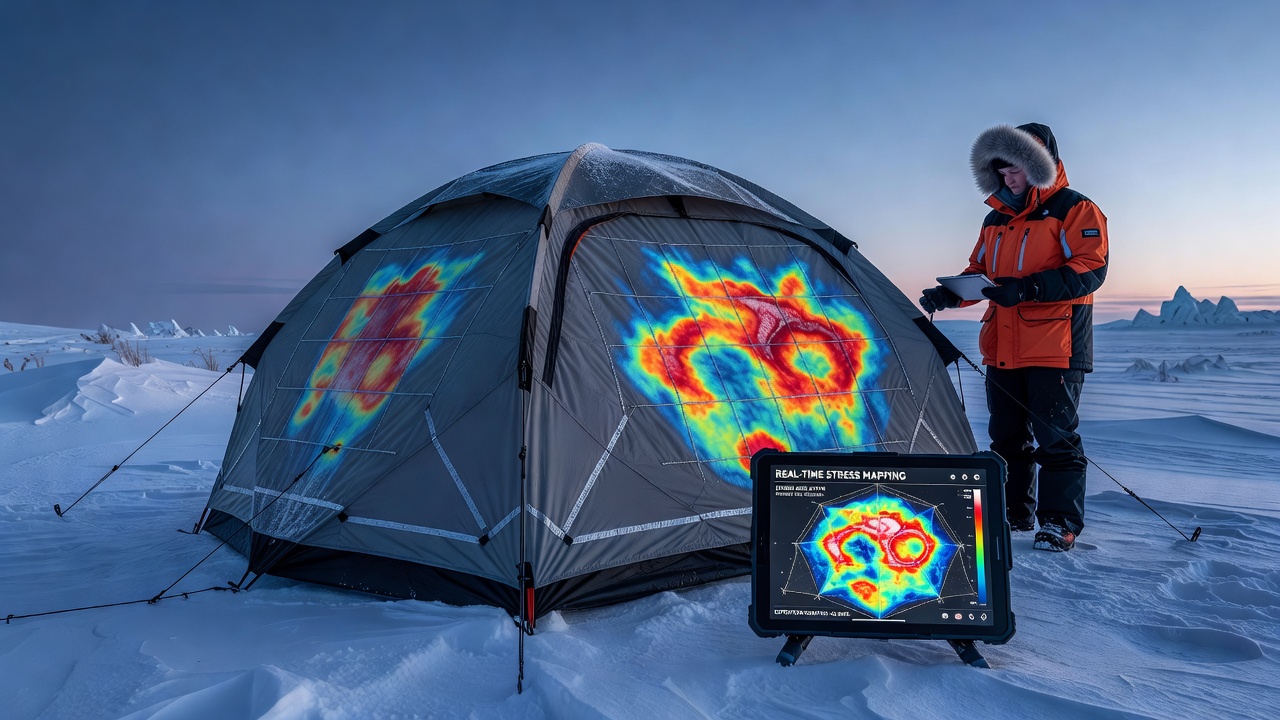
Expedition teams attach the sensor arrays to tent canopies, flysheets, and ground tarps before departure, and the installation process takes less than an hour once the fabric panels receive pre-sewn pockets or adhesive mounts. During a typical 30-day traverse in remote terrain, the network transmits aggregated stress maps via short-range radio to a base station inside the shelter, and that station relays summaries through Iridium or Starlink terminals when bandwidth permits. In October 2026, teams operating on the Antarctic plateau reported that real-time alerts allowed them to reinforce high-stress seams before fabric tears developed, and the same protocols now appear in commercial expedition kits supplied by European manufacturers.
Data Processing and Pattern Recognition
Raw readings undergo edge processing that identifies recurring stress cycles and sudden spikes, and algorithms flag deviations from baseline performance established during initial calibration. Machine-learning models trained on earlier expeditions distinguish between wind-induced flutter, snow loading, and abrasion from rocky terrain, while the resulting visualizations appear on rugged tablets carried by team leaders. According to reports published through CSIRO in Australia, these models reduced unplanned shelter repairs by 37 percent across four documented polar traverses between 2023 and 2025.
Integration with Broader Expedition Systems
Sensor outputs link to weather stations, GPS trackers, and power management units so that stress data can influence decisions about route changes or shelter orientation, and the same fabric panels sometimes carry flexible solar elements whose output drops when tension alters surface angles. Observers note that this interconnected approach turns the shelter itself into an active component of the expedition's information network rather than a passive structure. Field protocols now require daily review of stress summaries, and many teams archive the full datasets for post-expedition review by materials engineers.
Challenges in Remote Environments
Battery life remains a limiting factor because nodes must operate for weeks without resupply, and extreme cold reduces capacity while ultraviolet exposure accelerates fabric aging that the sensors themselves must detect. Redundant power paths and low-duty-cycle transmission schedules mitigate these issues, yet signal loss still occurs during heavy precipitation or when shelters sit in deep valleys. European Space Agency trials completed in 2024 demonstrated that hybrid satellite-terrestrial relays maintain 94 percent data continuity under such conditions, and those findings now guide hardware choices for commercial systems.
Conclusion
Sensor networks embedded in high-performance shelter fabrics deliver measurable improvements in the detection and management of mechanical stress during extended expeditions, and ongoing work at research centers on multiple continents continues to refine node durability, data transmission efficiency, and predictive algorithms. The resulting information supports safer decision-making in the field while generating long-term datasets that inform the next generation of textile engineering.